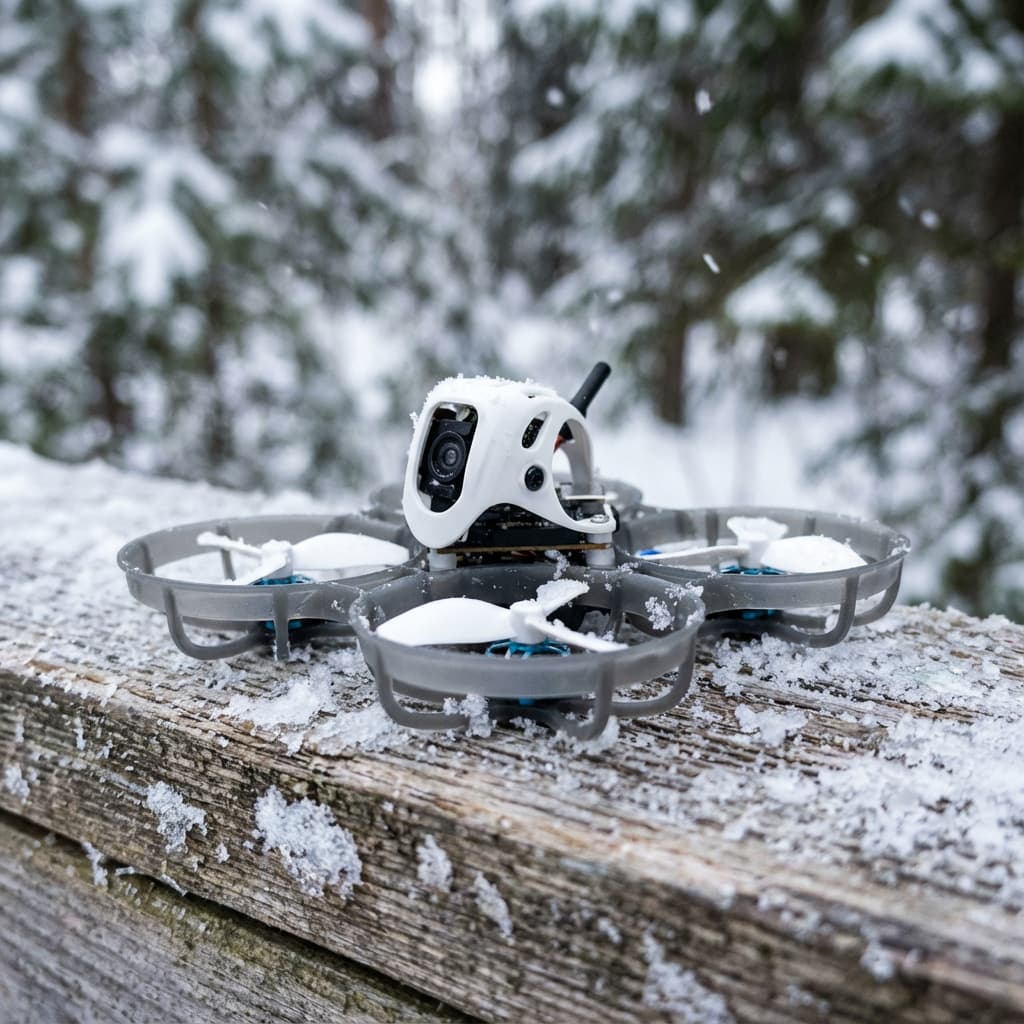
I still remember the first time a tiny whoop zipped through my living room—my cat jumped, my coffee threatened to flee the table, and I was hooked. That visceral, close-quarters thrill is why the BetaFPV Meteor75 Pro O4 grabbed my attention. Priced at £169.99 and sold through Unmanned Tech, this 75mm brushless whoop promises HD DJI O4 video, aggressive punch from 1102 motors, and a modular PNP option that made me imagine building the exact tiny racer I wanted.
1) Why I Bought the Meteor75 Pro O4 (First Impressions)
Indoor flights made me fall in love with the Tiny Whoop idea
I bought the Meteor75 Pro O4 because most of my flying happens indoors—hallways, living rooms, and those “I swear I can fit through that gap” moments. Bigger quads feel like overkill inside, and I don’t want every mistake to end with broken props, scratched furniture, or a bruised ego. A tough little Tiny Whoop is my kind of fun: quick to launch, forgiving in a crash, and exciting even at low altitude.
When I started looking at the BetaFPV Meteor75 lineup, this one stood out as the “serious” whoop that still feels simple. Oscar Liang’s line summed up what I was thinking:
Oscar Liang: “The Meteor75 Pro O4 blends modern digital video with agile whoop performance—it’s a logical step for pilots wanting crisp footage in a tiny package.”
The quick specs that sold me
The price was the first hook: £169.99 at UnmannedTechShop.co.uk. That’s not pocket change, but it sits in a sweet spot where it can make sense for both beginners and experienced pilots—especially if you want a clean, modern setup without piecing everything together.
- Frame weight: 37.20 g (light, but built for bumps)
- Wheelbase: 80.8 mm (compact and nimble)
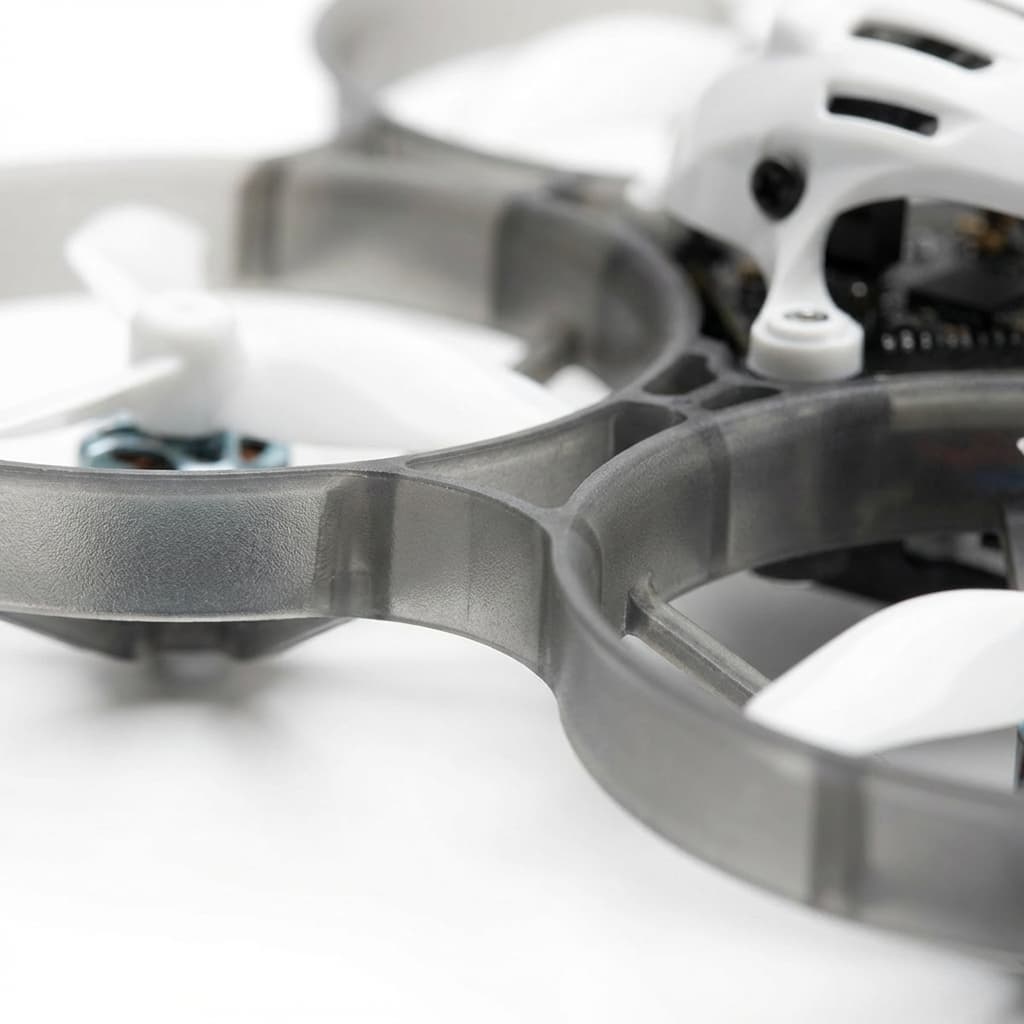
- Look: transparent gray canopy/frame vibe that just feels “premium whoop”
On paper it’s still a 75mm-style whoop, but it reads like a tiny performance build—something I can rip around the house and still trust outdoors when the wind isn’t being rude.
Two variants: plug-and-play HD or full custom
I also liked that BetaFPV didn’t force one path. The DJI O4 version is the easy button: crisp digital FPV and a clean, ready-to-fly feel. The PNP Without VTX option is for the tinkering mood—bring your own video system and receiver choices.
One practical detail I noticed while shopping: variant selection changes availability in real time. So I made a habit of checking the product listing right before buying, just to avoid picking a setup that suddenly goes out of stock.
2) Hardware Deep Dive: Motors, Props, and Flight Feel
Motors: 1102 Brushless punch and what KV really feels like
The first time I armed this Brushless Whoop, I could tell it wasn’t built for “gentle cruising.” BetaFPV lists it with 1102 18000KV motors, though the specs also mention 1102 22000KV. In simple terms, KV is how fast a motor wants to spin per volt—so higher KV usually means more snap and faster throttle response on a 1S setup.
On the sticks, that translates to quick pop-ups, easy direction changes, and enough punch to recover when I mess up a line. The higher-KV option feels more “on edge” (great for tight freestyle), while the lower-KV setup feels a touch calmer and easier to modulate indoors.
BetaFPV Team: “We designed the Meteor75 Pro to balance durability with agility; the 45mm props and brushless motors give it unexpected power for its size.”
Propellers: why the 45mm propellers changed my confidence
The included Gemfan 45mm propellers (3-blade) are a big part of the Meteor75 Pro’s character. More blade area gives me better grip in the air, which shows up as steadier cornering and less “float” when I chop throttle.
I did swap prop types during testing—trying a lighter, lower-pitch set—and the quad instantly felt looser and less planted. Fun, but I kept coming back to the stock 45mm 3-blades for that locked-in feel, especially when I’m threading gaps.
Flight Controller + battery: Matrix 3-in-1 FC smoothness and 1S Battery flight time
The Flight Controller is the Matrix 3-in-1 FC (Matrix 1S 3IN1 HD FC), and the stock tune surprised me—in a good way. Indoors, it stays smooth and helps reduce jello, so quick yaw snaps don’t turn into shaky footage.
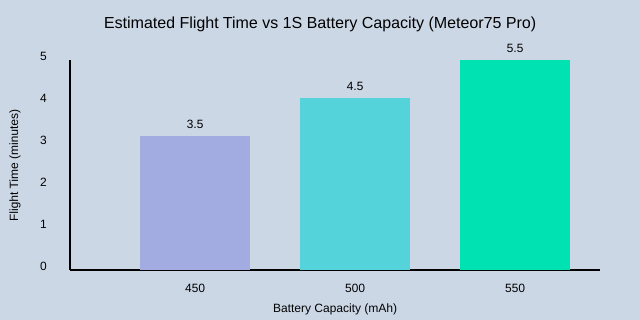
With the LAVA 1S 550mAh, my 1S Battery flight time landed around 5 minutes 30 seconds in calmer cruising. When I pushed power loops and repeated punch-outs, it dropped closer to the typical 3–5+ minute range. Outdoors, wind makes it work harder, and you feel that in both handling and runtime.
3) DJI O4 vs PNP: What’s in the Box (Comparison Table)
When I was choosing between the DJI O4 Air version and the PNP Without VTX option, I realized the decision isn’t only about video—it’s also about what lands on your bench. One box is built for fast, clean setup with DJI O4 Transmission. The other feels like a builder’s bundle, especially if you like swapping parts and dialing in your own setup.
Oscar Liang: “A clear comparison of kit contents is crucial—PNP buyers often get more hardware to play with, while O4 buyers enjoy plug-and-play HD video right out of the box.”
Side-by-side: DJI O4 Version vs PNP Without VTX
| In the Box | DJI O4 Version (Plug-and-Play Digital) | PNP Without VTX (Builder-Friendly) |
|---|---|---|
| Drone | 1x Quadcopter | 1x PNP drone (no VTX installed) |
| Canopy | Installed setup for DJI O4 camera | Redesigned Canopy for O4 Air Unit |
| Propellers | 4x Gemfan 45mm 3-Blade | 4x GF 45mm 3-Blade |
| Shock-absorbing balls | 4x (for DJI O4 camera) | 12x total (4 standard + 8 extra) |
| Adapters & cables | Type-C to SH1.0 adapter | |
| SH1.0-4Pin adapter cable | Type-C to SH1.0 adapter | |
| SH1.0-4Pin HD cable | ||
| SH1.0-6Pin HD cable | ||
| Antenna | — | 1x 5.8G VTX antenna |
| Mounting parts | 4x M1.4*4 Phillips flat head screws | Camera bracket + shock-absorbing mount |
| Multiple screw types (incl. M1.44, M1.4104, M24) | ||
| Tools | — | Phillips screwdriver |
Why the PNP kit can feel more “generous”
The PNP Without VTX package gives me more of the small stuff I always end up hunting for—extra shock balls, an antenna, more screws, and even a screwdriver. If you’re the type who likes to experiment, it’s simply easier to build and rebuild.
Quick reality check before you buy
BetaFPV notes that accessories can change based on availability, so I always verify the latest packing list on the vendor page before ordering—especially if I’m counting on a specific cable or mount.
4) Buying, Shipping, and the Money Talk
Where I bought the BetaFPV Meteor75 Pro
I picked up the BetaFPV Meteor75 Pro from www.unmannedtechshop.co.uk, mainly because the listing was clear and the options were easy to compare. At checkout, shipping is calculated automatically, so I could see the total before committing.
The big win for UK buyers is the free shipping threshold: orders over £100 ship free in the UK. That nudged me to bundle a few sensible extras (like spare props and a battery) instead of placing a second order later and paying shipping twice.
Price £169.99 and why financing can help
The Price £169.99 sits in that “I want it now” zone—high enough to make you pause, but not so high that it feels unreachable. This is where Shop Pay Installments can lower the immediate cost barrier. It’s great for impulse buys, but I still read the terms carefully because missed payments can cause problems.
BetaFPV Team: “We aim to make high-performance micro FPV accessible—flexible shipping and payment options help new pilots get into the hobby without big upfront costs.”
5) Verdict, Tangents, and Two Wild Cards
Tiny Whoop Review: My Final Take
After living with the BetaFPV Meteor75 Pro O4 for a while, my verdict is simple: it’s a tiny, durable brushless whoop that feels like a premium little machine for £169.99. The DJI O4 option gives me crisp HD video and low latency that makes indoor lines feel “locked in,” and the PNP route keeps things open if I want my own VTX/receiver setup later. For Flight Performance, it’s agile, stable, and surprisingly confidence-building—exactly why so many customer reviews call out its value versus similar whoops.
Oscar Liang: “For indoor freestylers and tiny whoop fans, the Meteor75 Pro O4 is a meaningful upgrade that doesn’t overcomplicate the experience.”
Strengths are clear: DJI O4 HD clarity, a tough 75mm frame, the versatile PNP option, and a stock tune that feels steady enough to learn on. The weaknesses are the usual 1S trade-offs—expect roughly 3–5+ minutes depending on how hard I push it on 450–550mAh packs—and outdoor flying is best saved for calm days because wind can bully a light whoop. Still, it stays under 250g, which keeps life simpler in many places.
Beginner Friendly… Until My Hallway Power Loop
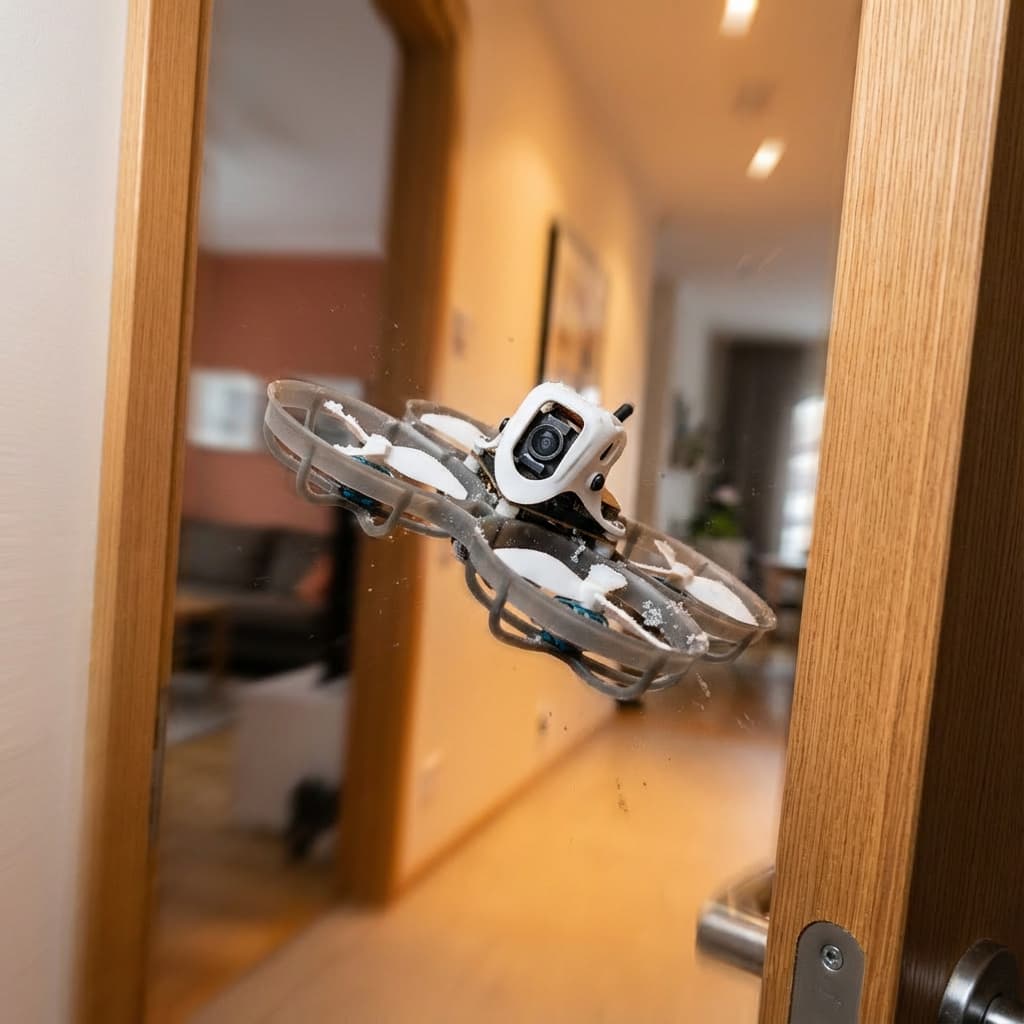
I will say this: it’s Beginner Friendly right up until you decide your narrow hallway is a freestyle training gym. I tried a power loop between two door frames, clipped the air, and for one dramatic second I was convinced I’d invented a new home décor trend: “modern FPV lampshade.” The Meteor75 Pro O4 bounced, shrugged it off, and kept going—my pride took longer to reboot.
Two Wild Cards: A Freestyle Juggernaut With a Movie Dream
Wild card one: this whoop feels like a Freestyle Juggernaut in a matchbox—like strapping a tiny rally car to a set of Gemfan 45mm 3-Blade props and letting it rip around chair legs and table gaps.
Wild card two: if I used it as a tiny cinematic rig, I’d film “mouse-eye” tours—under sofas, through stair rails, and around kitchen islands—smooth, close, and personal. And as a first brushless whoop? I’d say yes, especially for indoor flight and learning freestyle, as long as you accept the short 1S runtime and keep windy outdoor sessions on the wishlist, not the schedule.
TL;DR: The BetaFPV Meteor75 Pro O4 is a compact, punchy brushless whoop with DJI O4 HD video, nimble 45mm props, ~5m30s flight on a 550mAh 1S pack, and a price of £169.99—great for beginners and freestylers alike.